AMAZING WAYS TO SAVE MORE MONEY

Amazing Ways to Save More Money (Without Feeling Deprived)
Saving money often gets a bad reputation. People imagine extreme frugality, saying no to everything fun, and constantly feeling restricted.
But saving money doesn’t have to feel like punishment or deprivation.
In fact, when done intentionally, it can feel empowering, like you’re finally telling your money where to go instead of wondering where it went.
The truth is, most people don’t need to overhaul their entire lifestyle to save more money. What they need are simple, repeatable strategies that work quietly in the background while they live their lives.
Let’s explore some amazing to save money. Use these realistic ways to save whether you’re just starting your financial journey or looking to tighten things up and build momentum.
Why Saving Money Matters More Than Ever
Saving money isn’t just about having extra cash. It’s about creating options.
When you save:
- Emergencies don’t become crises
- Opportunities feel possible instead of stressful
- You rely less on debt
- You gain confidence and peace of mind
Saving money gives you control, and control is the foundation of financial freedom.
1. Pay Yourself First (Even If It’s Small)
One of the most powerful saving habits is also one of the simplest: pay yourself first.
Instead of saving whatever is left over at the end of the month (which is often nothing), flip the script:
- Decide how much you want to save
- Automatically move it to savings
- Live on the rest
Even $25 or $50 per paycheck adds up over time. Consistency matters more than the amount.
Savings Tip: Automate your savings so you don’t have to rely on willpower.
2. Track Where Your Money Is Actually Going
You can’t save what you don’t see.
Many people underestimate how much they spend on dining out, subcriptions, convenience purchases, and impulse buys.
Tracking your spending, even for just 30 days, can be eye-opening.
This isn’t about judgment. It’s about awareness. Once you see patterns, you can make intentional changes without feeling deprived.
3. Cut Expenses That Don’t Add Value
Saving money doesn’t mean cutting everything. It means cutting what doesn’t matter to you.
Ask yourself:
- Does this expense improve my quality of life?
- Would I miss it if it were gone?
- Is there a cheaper alternative?
Cancel unused subscriptions. Negotiate bills.

Downgrade services you rarely use. Keep what aligns with your values.
Do the work and see the instant savings add up. That’s values-based saving.
4. Embrace Smart Grocery Strategies
Food is one of the biggest budget categories and one of the easiest to optimize.
Here are some ways I’ve been able to save on groceries:
- Meal plan before shopping
- Shop with a list
- Buy store brands
- Use cash-back apps and coupons
- Avoid shopping hungry
Small changes at the grocery store can save hundreds and sometimes thousands per year.
5. Use Cash-Back and Rewards Strategically
If you’re spending money anyway, you might as well earn something back.
Cash-back apps, rewards programs, and credit card incentives can quietly put money back in your pocket, if used responsibly.
Here are some major key rules to remember:
- Never overspend for rewards
- Pay credit cards in full every month
- Treat rewards as a bonus, not income
Used correctly, rewards can supplement your savings effortlessly.
6. Lower Your Housing Costs (If Possible)
Housing is often the largest expense in any budget. Even small reductions can make a big difference.
Consider the following:
- Refinancing if interest rates allow
- House hacking (renting a room or space)
- Downsizing or relocating
- Negotiating rent when possible
Lowering housing costs create instant breathing room in your finances.
I was able to retire from the federal government early by house-hacking.
7. Reduce Transportation Expenses
Transportation costs can quietly drain your budget.
Ways to save include:
- Driving your car longer instead of upgrading
- Shopping around for car insurance
- Using public transportation when feasible
- Carpooling or combining errands
Transportation savings free up money for goals that matter more.
8. Build an Emergency Fund (So You Stop Losing Money)
Emergencies are expensive, not because they happen, but because they’re often funded with credit.
An emergency fund prevents reliance on high-interest debt, protects your savings and investments, and reduces stress.
Start with a goal of $1,000, then build toward 3–6 months of expenses.
This is one of the most powerful money-saving tools you can have.
9. Avoid Lifestyle Inflation
As income increases, expenses often rise right along with it.
Lifestyle inflation feels harmless, but it can keep you stuck living paycheck to paycheck no matter how much you earn.
Instead of lifestyle creep, increase savings when income increases.
Upgrade selectively, and prioritize long-term freedom over short-term upgrades.
10. Make Saving Automatic and Boring
The best savings strategies don’t require daily effort.
Use such strategies such as automating your savings transfers, retirement contributions, and bill payments.
When saving becomes automatic, it becomes sustainable. And sustainable habits beat motivation every time.
11. Save Windfalls Instead of Spending Them
Tax refunds, bonuses, cash gifts, and side income are powerful opportunities for financial growth.
Instead of spending them immediately, you can:
- Save all or part of the money
- Use it to pay down debt
- Fund sinking funds or investments
Windfalls can accelerate your progress when used intentionally.
12. Focus on Progress, Not Perfection
Saving money isn’t about doing everything right. Saving money is about doing something consistently.
Some months will be better than others. That’s normal.
What matters is being aware, making adjustments, and staying persistent.
Small wins compound.
The Real Secret to Saving More Money
Saving money isn’t about restriction—it’s about alignment.
When your spending reflects your values, your savings feels purposeful, your financial goals feel achievable, and cutting expenses feels empowering.
Saving money is simply choosing future freedom over short-term convenience, again and again.
Final Thoughts: Saving Is a Skill You Can Learn
No matter where you’re starting, you can save more money.
Not by being perfect.
Not by depriving yourself.
But by building systems that support the life you actually want.
Saving money isn’t the end goal...financial freedom is. Every dollar you save is a step closer to that freedom goal.
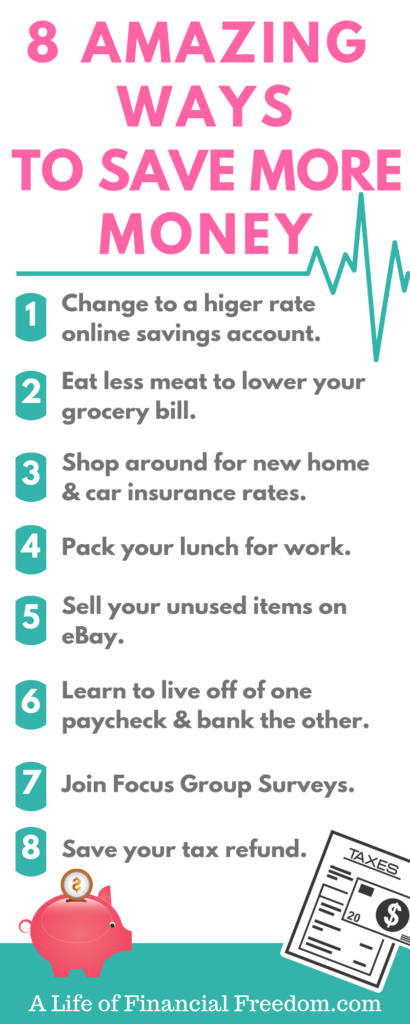
Here are 8 more amazing ways to save more money and beef up your bottom line this year.
These ways include from changing to an online savings account offering a higher rate of interest to banking that tax refund instead of spending it.
8 More AMAZING WAYS TO SAVE MORE MONEY
INFOGRAPHIC
Looking for even more ways to save more money? Check out tips to saving $30,000 in 6 months.

RELATED POSTS:
10 Ways to Kick Start Your Finances
Grab Your FREE Goal Setting Worksheet